Protecting Trial Integrity from End to End
Blinding in Clinical Trial Supply
Protecting the blind is one of the most critical safeguards in any clinical trial. Unblinding can introduce bias into a clinical trial, compromising the integrity of data collected for a patient, site or even an entire trial.
As investigational products become more complex and clinical trial supply chains more global, maintaining the blind requires both discipline and precision. Unblinding risks can occur at every stage, from manufacturing to site dispensing. Identifying where unblinding risks could occur in the supply chain, and developing strategies to eliminate these, should be a key part of planning and clinical supply strategy.


Identify which Stakeholders are Blinded to Identify Risks
Strategies employed to protect the blind in clinical trials will depend on which stakeholders are blinded, and which are unblinded. KLIFO’s default is to assume that everyone involved in the trial is blinded until we receive written confirmation to the contrary. This information is critical to establishing:
- Access controls to trial-specific documents.
- Types of reports provided to, or online access granted to, each stakeholder should consider their blinded status. For example, if providing online access to inventory reports, data fields that could potentially unblind a trial should not be visible to blinded personnel.
- Design of documentation and labels, and who should approve these, should account for the blinded status of each stakeholder.
- Communication rules employed across the supply chain. For example, if third party service providers are not aware of the blinded status of all stakeholders involved in the clinical trial, direct communication with site personnel, the Sponsor or CRO should be centralized through the CTS service provider. For example, we have been occasions in the past where blinded CRO or site staff have directly contacted local depots inquire about contents of shipments they have received and have been provided with an unblinded response.
Packaging and labelling design and processes
Use of a blinded batch number on clinical trial labels is essential to preventing unblinding. Similarly, expiry dates between treatment groups should be identical, even if the products themselves have different expiry dates. Unfortunately, this means adopting the expiry date of the earliest expiring product.
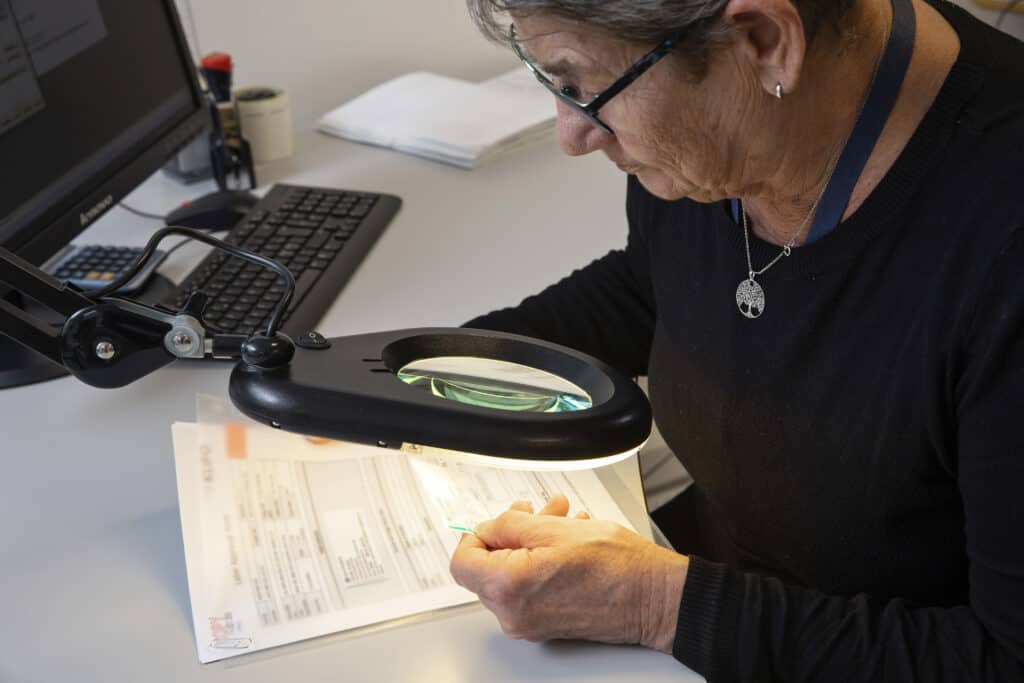
Positioning of labels and tamper seals on packaging – Industry colleagues have commented that unblinding in this way would never happen. It does – we have seen it and have even been asked to repackage clinical trial supplies (packaged elsewhere in case you are wondering!) where differences in label or tamper seal placement allowed treatment groups to be identified. In KLIFO we guard against this by including photographs in our batch records that clearly indicate where labels should be placed on packaging. Other approaches we have seen include the use of tick marks and templates to ensure accurate and consistent label placement between treatment groups.
Blindness checks of in-process samples, through which a sample pulled from packaging operations is compared with a correctly labelled mock pack, should be part of any packaging process for a blinded trial.
Emergency Unblinding
In some situations, for example if a patient participating in a clinical trial experiences a serious adverse event, it may be necessary to unblind that patient. If an IRT/RTSM system has been employed to support the clinical trial, this functionality is usually provided by an unblinding module in the IRT/RTSM system itself. This tracks who accessed the patient’s unblinding information, when, and why in addition to automatically alerting relevant stakeholders to the unblinding event.
While most blinded clinical trials are supported by this technology, there are exceptions. If there is not a technological solution to unblinding patients, solutions such as tamper evident code break envelopes or labels continue to be used.